Wednesday, November 18, 2026
Latest:
- The Phantom Woody Noise: Why Caught Behind Decisions Test Every Umpire
- Ashes Sparks in White-Ball Cricket: Australia vs. England 1st ODI Preview & The Controversy Fueling Cricket’s Fiercest Rivalry
- Blockbuster IPL Trade: Hardik Pandya Set for Punjab Kings as Arshdeep Singh Joins Mumbai Indians
- Youth and Experience: India’s Pace Revolution Meets Senior Mastery in the 50-Over Game
- WTC Final Qualification: Can India Overcome New Zealand Challenge to Reach The Decider?

Smart Cricket: Deep Analysis & Exclusive Views
Smart Cricket: Deep Analysis & Exclusive Views
- The Phantom Woody Noise: Why Caught Behind Decisions Test Every Umpire
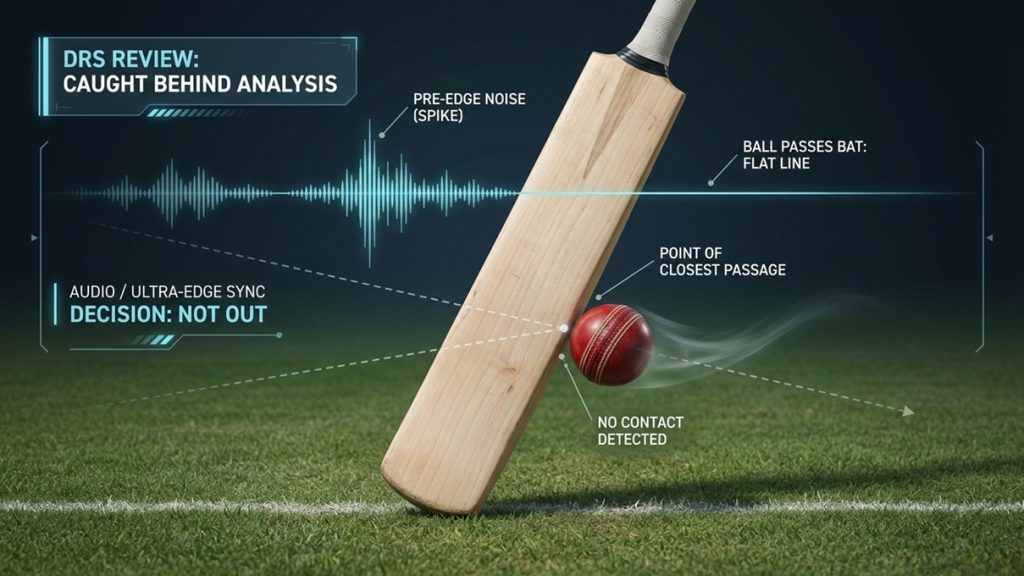
When Jasprit Bumrah bowls full in the corridor of uncertainty, every delivery feels like an event. Against Devon Conway, Bumrah angled one across the left-hander, drew a tentative poke outside off stump, and triggered a sharp woody noise as the ball passed the outside edge. India’s cordon went up as one. At the bowler’s end, Richard Illingworth—one of the finest elite umpires in world cricket—raised his finger.
Devon Conway shook his head and called for the Decision Review System immediately. Moments later, sound-wave technology told a very different story. A clear murmur appeared on the audio graph before the ball reached the bat, with a completely flat line as it passed the willow. Illingworth overturned his call with a wry smile.
Watching that replay unfold on television brings back a familiar feeling for anyone who has stood in a white coat. Even with years of experience, caught-behind appeals remain the single hardest judgment call in cricket.
Why the Human Brain Gets Tricked by Sound and Sight
In Test cricket, elite officials have UltraEdge, Snicko, and super-slow-motion cameras to separate a faint feather from a phantom noise. In club and county league cricket across England, you get one real-time look and two seconds to decide.
As an ECB Level 3 panel umpire officiating across the Home Counties Women’s Premier League, Cherwell League, and Buckinghamshire county age-group fixtures, I rely heavily on sensory alignment. You watch the ball pass the bat while listening intently for a spike in sound. Usually, sight and sound confirm each other.
Sometimes, however, the human brain merges two separate events into one.
Common Culprits Behind “Phantom” Edge Noises
- Loose Bat Handles: A slightly worn rubber grip or a creaking splice inside the handle often clicks at the exact moment a batter checks a defensive push.
- Spikes Hitting the Pitch: Front-foot studs crunching into hard, dry turf create a sharp percussive crack that travels straight down the pitch toward the bowler’s end.
- The Ball Brushing Clothing or Pad: Even when the bat sits well clear of the front pad, a seam skimming stiff trouser fabric or thigh-guard straps produces a distinct woody rustle.
- Subtle Deviation: When a seamer like Bumrah gets late movement off the seam, the ball changes direction right beside the outside edge. Your eyes register movement at the exact instant your ears catch an unrelated click.
How Umpires Judge Caught-Behind Appeals Without DRS
When you stand in the middle without television replays, you cannot guess. Under MCC Law 27 and Law 32, the bowler and fielding side must convince you beyond reasonable doubt that the ball touched the bat or glove before being caught cleanly.
During my 16 years of umpiring—from my earliest Middlesex Championship fixtures at Alexandra Park back in 2010 to modern league matches—I have learned to run through a strict mental checklist before raising a finger:
- Look for a Change of Spin or Seam: A genuine outside edge almost always alters the rotation of the ball or causes a tiny deflection off its original line.
- Watch the Wicketkeeper’s Gloves: Keepers react differently to an edge than to a clean take. A late, reactive snatch often signals a subtle deviation off the bat.
- Read the Batter’s Immediate Reaction: Experienced batters rarely mask surprise. While you never adjudicate based on player reactions alone, an instant, baffled shake of the head like Conway’s often reflects genuine surprise that a noise was heard.
- Stay Still at the Point of Release: Keep your head completely level as the ball reaches the batter. Any head movement blurs your depth perception at the critical millisecond.
Why DRS Makes Us Respect On-Field Umpires More
Moments like the Bumrah-Conway review are not failures of umpiring. Rather, they prove just how fine the margins are at 85 miles per hour. Illingworth heard a distinct woody sound at the exact frame the ball passed the outside edge of the bat. In real time, 99 out of 100 umpires on the planet would have raised their finger.
Technology simply gives Test cricket a safety net that grassroots cricket does not have. When that safety net overturns a call, a good umpire smiles, resets, and prepares for the next ball.
Written by Hari Nochiyil, an ECB Level 3 panel umpire officiating across UK league and county age group cricket since 2009
Want to Test Your Own Umpiring Instincts?
Think you can spot the difference between an inside edge onto the pad, pitching outside leg, and a plumb LBW under pressure? Step into the middle and test your knowledge of MCC Law 36 in our interactive LBW Umpire Decision Quiz—or try chasing 16 runs in six balls in the Super Over Batting Challenge.
- Ashes Sparks in White-Ball Cricket: Australia vs. England 1st ODI Preview & The Controversy Fueling Cricket’s Fiercest Rivalry

Friday, November 13, 2026, delivers a blockbuster double-header for cricket fans across the globe. While India and New Zealand lock horns in a pivotal 4th ODI at Bay Oval, all eyes in Perth will be glued to Australia vs. England in the opening clash of their ODI series—a fixture carrying far more tension than a typical bilateral opener.
Here is everything you need to know heading into tomorrow’s action, including the heated narratives surrounding the Perth showdown:
1. Australia vs. England – 1st ODI Series Opener
- Venue: Perth Stadium, Perth
- The Rivalry & Recent Controversy: Whenever Australia and England meet, the “Spirit of Cricket” debate is rarely far behind. Heading into this series, friction between the two camps has reignited following sharp exchanges in the media over aggressive on-field sledging, slow over-rate tactics, and disputed boundary/caught-behind referrals during their recent white-ball encounters.England’s ultra-aggressive “Bazball-inspired” ODI approach—pushing boundaries even in gray-area fielding and running situations—has drawn pointed criticism from former Australian greats, who accused England of selective sportsmanship. Meanwhile, the English camp has fired back, labeling Australia’s verbal pressure and tactical time-wasting at the death as outdated gamesmanship. With neither captain willing to back down, expect fiery exchanges from ball one on a bouncy Perth surface.
- Tactical Battle to Watch:
- Pace vs. Aggression: Perth Stadium offers genuine bounce and carry. Australia’s pace attack will test England’s top order with hard lengths and short-pitched bowling, daring England’s batters to take on the deep square boundaries.
- Middle-Overs Control: With both sides packing explosive finishers, the team that controls the 15-to-35-over phase with disciplined spin and reverse-swinging pace will hold the upper hand.
2. New Zealand vs. India – 4th ODI
- Venue: Bay Oval, Mount Maunganui
- What’s at Stake: As the 5-match ODI series reaches a critical juncture, India’s top-order firepower faces a stern test against New Zealand’s disciplined seam movement under lights. Expect a high-scoring tactical battle where death-over execution could decide the series momentum.
Other Global Cricket Action Tomorrow:
- Test Cricket: Day 2 of the Afghanistan vs. Zimbabwe Test match resumes in the UAE, promising an intriguing battle between spin and patient batting.
- T10 & Franchise Action: The Abu Dhabi T10 League continues its rapid-fire schedule at Sheikh Zayed Stadium, alongside crucial fixtures in the Nepal Premier League.